Only in the U.S. Senate, this is a fast-paced voting session in which Senators can offer an unlimited number of amendments pertaining to a budget resolution or reconciliation bill after the time for regular debate runs out. Senators then vote on these amendments in rapid succession.
Vote-a-rama
Also known as a Treasury security, these are IOUs that the public, including individuals, banks, and other countries, receive in exchange for lending the federal government money.
Treasury Bond
The central bank of the U.S. It is tasked with managing the economy and works to keep prices stable and support a strong job market.
The Federal Reserve (the Fed)
Taxes on the imports of foreign goods. They make up the majority of customs duties.
Tariff
Funded through general tax revenue and the premiums paid by Medicare beneficiaries, it pays for Medicare Part B, Part D, and relevant Part C expenses.
Supplementary Medical Insurance (SMI) Trust Fund
The accounts Social Security uses to pay out monthly benefits to retirees and people with disabilities. The broader trust fund consists of the Old Age and Survivors Insurance (OASI) Trust Fund and the Disability Insurance (DI) Trust Fund.
Social Security Trust Fund
A federal program that provides retirement income, survivors benefits, and disability benefits to over 70 million Americans.
Social Security
Also referred to as debt held by the public, this is the amount of money that the federal government owes to other entities, including individuals, businesses, and banks.
Public Debt
Programs that use workers’ taxes to fund the benefits of current enrollees. In a pay-as-you-go (PAYGO) system, the revenue from workers' taxes is not saved to fund their benefits later. Instead, it is spent on those currently receiving benefits. Social Security and Medicare are examples of pay-as-you-go systems.
Pay-as-you-go System
Funded through payroll taxes, this pays for retirees’ Social Security benefits. If no changes are made to current law, this will run out in 2032, resulting in an automatic 22% cut in retirement benefits.
Old-age and Survivors Insurance (OASI) Trust Fund
The executive agency that oversees the president’s fiscal policy, including putting together the President’s Budget every year.
Office of Management and Budget (OMB)
Money the government brings in that is not related to taxes. Examples include revenue from fees and permits, fines and penalties, donations, and national park entrance fees.
Non-tax Revenue
Interest payments on the national debt paid by the government. Think of it like the cost of the national debt.
Net Interest Payments
The part of Medicare that provides prescription drug coverage. Private health insurance companies administer these benefits.
Medicare Part D
Also known as Medicare Advantage, this is an alternative to Medicare Parts A and B that allows enrollees to select an approved private health insurance to administer their benefits. These plans often offer enrollees greater flexibility and additional benefits, such as vision, hearing, and dental coverage.
Medicare Part C
The part of Medicare that provides medical insurance. It covers trips to the doctor, home healthcare, medical equipment, and preventative care.
Medicare Part B
Also known as Hospital Insurance (HI), it is the part of Medicare that covers hospital visits, skilled nursing facility care, hospice, and some home healthcare.
Medicare Part A
Also known as Medicare Part C, this is an alternative to Medicare Parts A and B that allows enrollees to select an approved private health insurance to administer their benefits. These plans often offer enrollees greater flexibility and additional benefits, such as vision, hearing, and dental coverage.
Medicare Advantage
A government-funded health insurance program for Americans 65 and older and people with long-term disabilities.
Medicare
A federal- and state-funded health insurance program for low-income Americans.
Medicaid
Determining whether an individual is eligible for a program or benefit based on their income level or financial resources.
Means Testing
Money the government borrows from itself by transferring funds between agencies. It is essentially an accounting mechanism and exists only on a spreadsheet.
Intragovernmental Debt
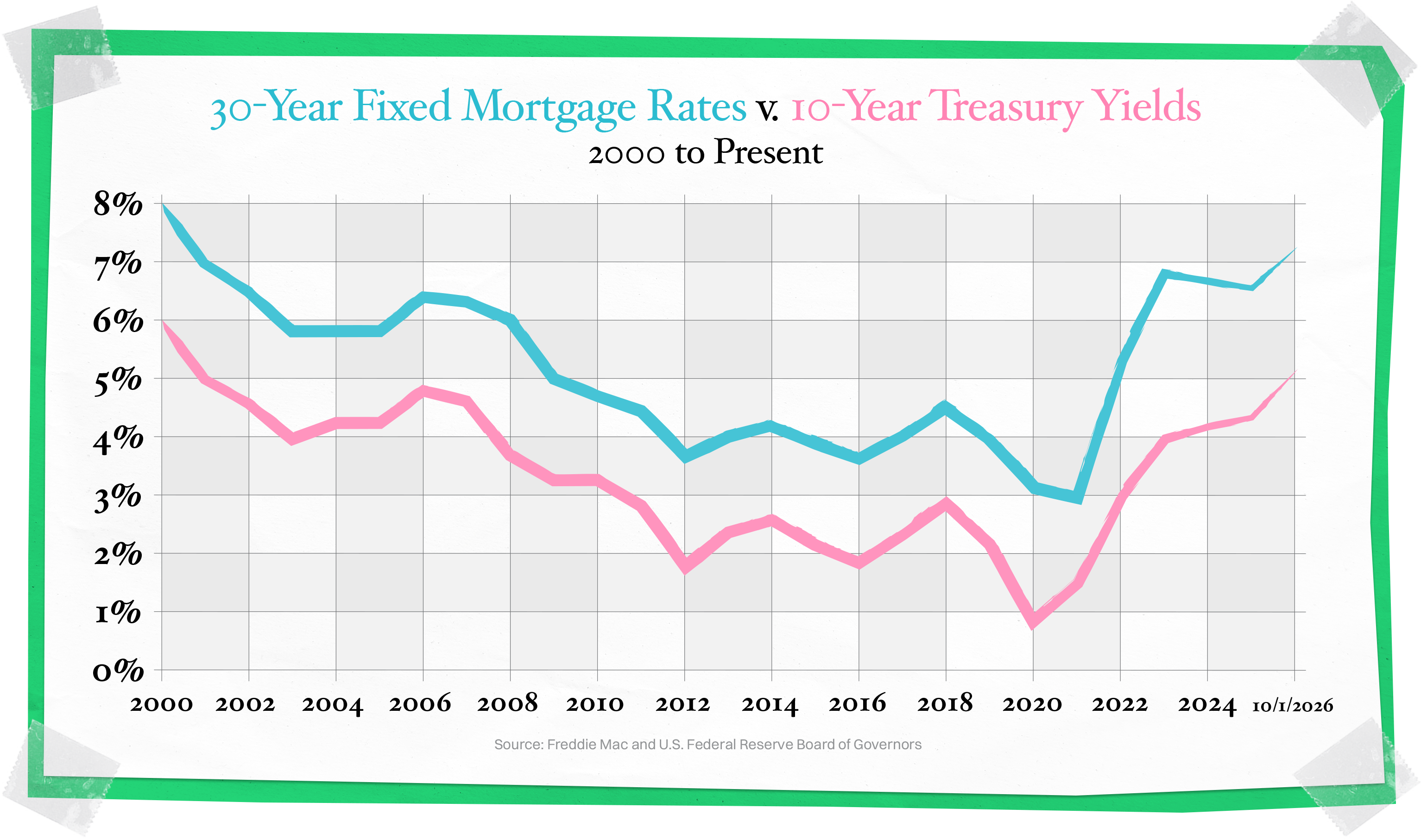
For borrowers, this is the percentage of an unpaid balance that is charged to the lender. It is essentially the cost of borrowing money. For lenders, it is the payment that they receive for saving or lending out money.
Interest Rate
Acting like a subscription fee, this is the monthly cost a person pays for their health insurance. For individuals who get insurance through an employer, this will typically come out of their paycheck.
Insurance Premium
The rise in prices of goods and services over time. The inflation rate measures this increase.
Inflation
A tax on some types of an individual’s income, including wages, salaries, tips, and certain investments.
Individual Income Tax
Found in the U.S. House of Representatives, this is the congressional body that oversees how and when legislation is debated and voted on, including what amendments will be allowed to be considered on those bills.
House Rules Committee
Funded primarily through the Medicare payroll tax, it pays for Medicare Part A and relevant Part C expenses.
Hospital Insurance (HI) Trust Fund
A tax levied on the transfer of money or property. It operates alongside the estate tax.
Gift Tax
Someone whose monthly budget relies on a set amount of income that does not change or grow easily. For example, someone who is retired and relying on Social Security benefits is living on a fixed income.
Fixed income
First coined in 2012, this term describes a rare moment when tax cuts are set to expire at the same time as government spending cuts are implemented, potentially leading to an economic recession. More generally, this term is sometimes used to describe any sudden drop in funding for a federal agency or program.
Fiscal Cliff
A tool the federal government uses to keep track of money it has collected for a specific program or purpose. The most well-known trust funds are the Old-Age and Survivors Insurance (OASI) and the Hospital Insurance (HI) trust funds.
Federal Trust Fund
A tax on specific goods and services, including gasoline, alcohol, and tobacco products.
Excise Tax
A tax on the transfer of money or property at death. It operates alongside the gift tax.
Estate Tax
A government program that guarantees individuals access to a benefit based on criteria established by law. Examples include Social Security, Medicare, and Medicaid.
Entitlement Program
Funded through Social Security payroll taxes, this pays monthly benefits to disabled workers and their families.
Disability Insurance (DI) Trust Fund
Also referred to as the debt ceiling, this is the maximum amount the federal government is allowed to borrow. Congress is responsible for raising or suspending this cap to ensure the government can continue to pay its existing debts.
Debt Limit
A flat tax on the annual profits of qualifying businesses, companies, and corporations.
Corporate Income Tax
The fixed amount an individual pays for different types of healthcare and medical services, like routine trips to the doctor or a visit to an emergency room. The cost for each healthcare item varies by insurance plan.
Co-pay
Money a person can borrow from a financial institution, like a bank, to pay for personal or family expenses, like a car or a home. This money is repaid over time, with interest.
Consumer Loans
A nonpartisan federal agency that evaluates the economic and budgetary impacts of legislation and provides economic data to lawmakers.
Congressional Budget Office (CBO)
The gap between the federal government's revenue and how much it spends when it spends less than it takes in.
Budget Surplus
Often simply called reconciliation, this is a legislative process that Congress uses to pass revenue and spending legislation on an expedited timeline with minimal debate. It allows the Senate to pass these bills with a simple majority instead of the 60 votes typically required to end a filibuster.
Budget Reconciliation
The amount of money an investor can expect to earn from a bond’s interest each year. This is the investor’s “rate of return.”
Bond Yield
The secondary market where the government’s lenders can buy and sell their Treasury bonds.
Bond Market
Legislation that changes the Constitution to bar the government from spending more than it takes in from revenue. It would, unless there is an exception, eliminate deficits and additional government borrowing.
Balanced Budget Amendment
Found in both the U.S. Senate and the U.S. House of Representatives, this is the congressional body responsible for writing legislation that funds government programs, agencies, and departments.
Appropriations Committee
A bill passed by Congress to fund all or parts of the federal government for a limited time, usually at prior year levels. It can keep the government operating if Congress fails to pass regular, full-year funding bills by the October 1st deadline.
Continuing Resolution (CR)
The point when the Old-Age and Survivors Insurance (OASI) Trust Fund runs out, and retirement benefits are cut because there won’t be enough payroll tax revenue coming in to cover those benefits.
Social Security Insolvency
How much money the government spends and takes in each year. It includes discretionary spending, mandatory spending, and revenue.
Federal Budget
This percentage compares a country’s debt to its gross domestic product (GDP), or the size of its economy. Generally, the higher the ratio, the greater the impact of the national debt on the economy.
Debt-to-GDP Ratio
The total amount of money that the U.S. government has borrowed from — and owes to — its lenders. It is made up of intragovernmental and public debt.
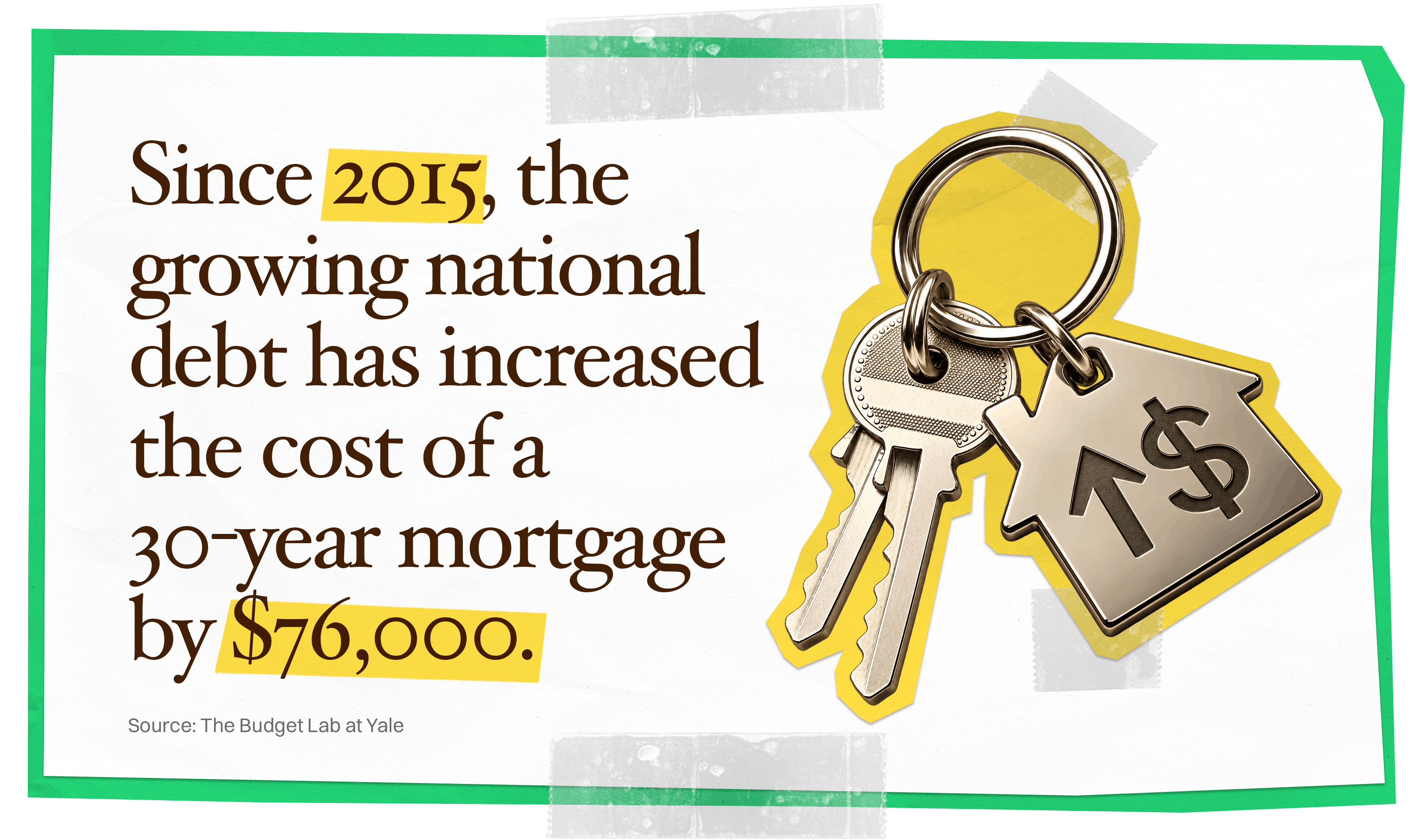
National Debt
The gap between the federal government's revenue and spending when it spends more than it takes in.
Budget Deficit
The total value of final goods and services produced in a country. It’s essentially the size of the economy and includes consumer spending, private investment, government spending, and a country’s imports and exports.
Gross Domestic Product (GDP)
The money the government takes in to fund its programs and services. It primarily comes from taxes on individuals and corporations.
Tax Revenue
Laws passed by Congress that provide the government with the authority to spend money for a certain fiscal year. Twelve appropriations bills determine discretionary spending.
Appropriations Bills
Laws passed by Congress that establish, continue, or modify a federal agency, program, or project. By themselves, these bills do not provide funding or authorize the government to spend money.
Authorization Bills
Also known as a concurrent resolution on the budget, this is Congress’s official spending blueprint that establishes funding priorities and deficit limits for the next year. By law, the House and the Senate must pass this plan by April 15.
Budget Resolution
The president’s funding plan that kicks off the budget process. It provides a breakdown of how the president would like Congress to fund the government and is due on the first Monday in February.
President’s Budget Request
The part of the federal budget that Congress needs to decide on each year. It is broken into defense and non-defense spending.
Discretionary Spending
Government spending that is automatically required by law each year without further action by Congress.
Mandatory Spending
What your health insurance requires you to pay for your own medical care.
Out-of-pocket Cost
When the Hospital Insurance (HI) Trust Fund runs out, payments to healthcare providers are cut because there won’t be enough payroll tax revenue coming in to cover benefits. The HI Trust Fund is projected to go insolvent in 2033.
Medicare Insolvency
A medical condition that lasts for 12 months or longer, such as diabetes, heart disease, hypertension, and cancer.
Chronic Disease
The percentage of healthcare costs that a patient with health insurance pays after they meet their deductible.
Coinsurance
The amount an individual pays for their healthcare before their insurance plan covers the cost. For example, someone with a $2,000 deductible will need to pay $2,000 in medical costs before their insurance begins covering their bills.
Deductible
A medical condition or disorder that lasts longer than 12 months and prevents an individual from earning a specific amount of money each month. This may qualify individuals for Social Security Disability Insurance.
Long-term Disability
A figure that compares the number of covered workers contributing to Social Security through payroll taxes to the number of people receiving monthly benefits.
Worker-to-Beneficiary Ratio
Also known as the payroll tax cap, this is a limit on how much of a person’s annual earnings is subject to the Social Security payroll tax. Any earnings above the maximum are not subject to the Social Security payroll tax.
Taxable Maximum
Social Security benefits available to individuals based on their spouse's earnings history. Eligible spouses — including certain divorced individuals — can receive up to 50% of their spouses' full benefits.
Spousal Benefit
These are IOUs that the government owes to itself. They are issued directly to government programs like Social Security and Medicare and cannot be bought or sold on the bond market.
Special Issue Securities
In the context of Social Security, this is the percentage of a beneficiary’s pre-retirement earnings that Social Security recipients can expect to receive in retirement.
Replacement Rate
The taxes on a portion of every worker’s earnings that go directly to funding specific government programs, like Social Security and Medicare.
Payroll Tax
The initial benefit a retiree can expect to receive from Social Security if they retire at their full retirement age.
Primary Insurance Amount (PIA)
The Social Security program that pays benefits to retired workers, their spouses, and their dependents. It also pays benefits to the survivors of deceased retirees.
Old-Age and Survivors Insurance (OASI)
The full legal name of Social Security, which includes the Old-Age and Survivors Insurance (OASI) and the Disability Insurance (DI) programs.
Old-Age, Survivors, and Disability Insurance (OASDI)
Also known as the normal retirement age, this is the age at which someone can start collecting their full Social Security benefit. For those born in or after 1960, that age is 67.
Full Retirement Age (FRA)
The age (currently 62) at which retirees can first begin receiving Social Security benefits, though doing so results in a permanent reduction in monthly payments.
Early Eligibility Age (EEA)
The Social Security program that provides monthly financial assistance to Americans with disabilities.
Disability Insurance (DI)
The amount of a worker's pay that is subject to Social Security payroll taxes. All wages up to the taxable maximum are covered earnings.
Covered Earnings
An annual increase in compensation to keep pace with inflation. For Social Security specifically, COLA represents an annual increase in monthly benefits.
Cost-of-Living Adjustment (COLA)
Someone who receives direct support from the government. This includes people who get Social Security checks, Medicare/Medicaid coverage, Supplemental Nutrition Assistance Program benefits, and more.
Beneficiary
This number averages a worker’s top 35 years of earnings. The Social Security Administration uses it to calculate a retiree’s original monthly Social Security benefit.
Average Indexed Monthly Earnings (AIME)