Interest rates can affect everything from the cost of buying a home to the money you make off a savings account. But what even are interest rates, who determines them, and what role do they play in the broader economy?
What’s an interest rate?
Interest is essentially the price of borrowing. When you take out a loan, the lender charges a fee — or interest — in exchange for letting you use their money. When you deposit funds in a savings account, the bank pays you interest for allowing it to use your money.
Interest rates are usually shown as a percentage of the amount borrowed or saved. For example, a 5% annual interest rate on a $1,000 loan would generally equal $50 in interest over one year.
Interest rates affect the federal government, too. When the government spends more on programs and services than it collects in revenue, it borrows to cover the difference. It must then pay interest to the investors who lend it money.
How are interest rates set?
There is no single interest rate for the entire economy. Banks and other lenders set their own rates based on factors such as inflation, economic conditions, the type and length of the loan, and the borrower’s credit history.
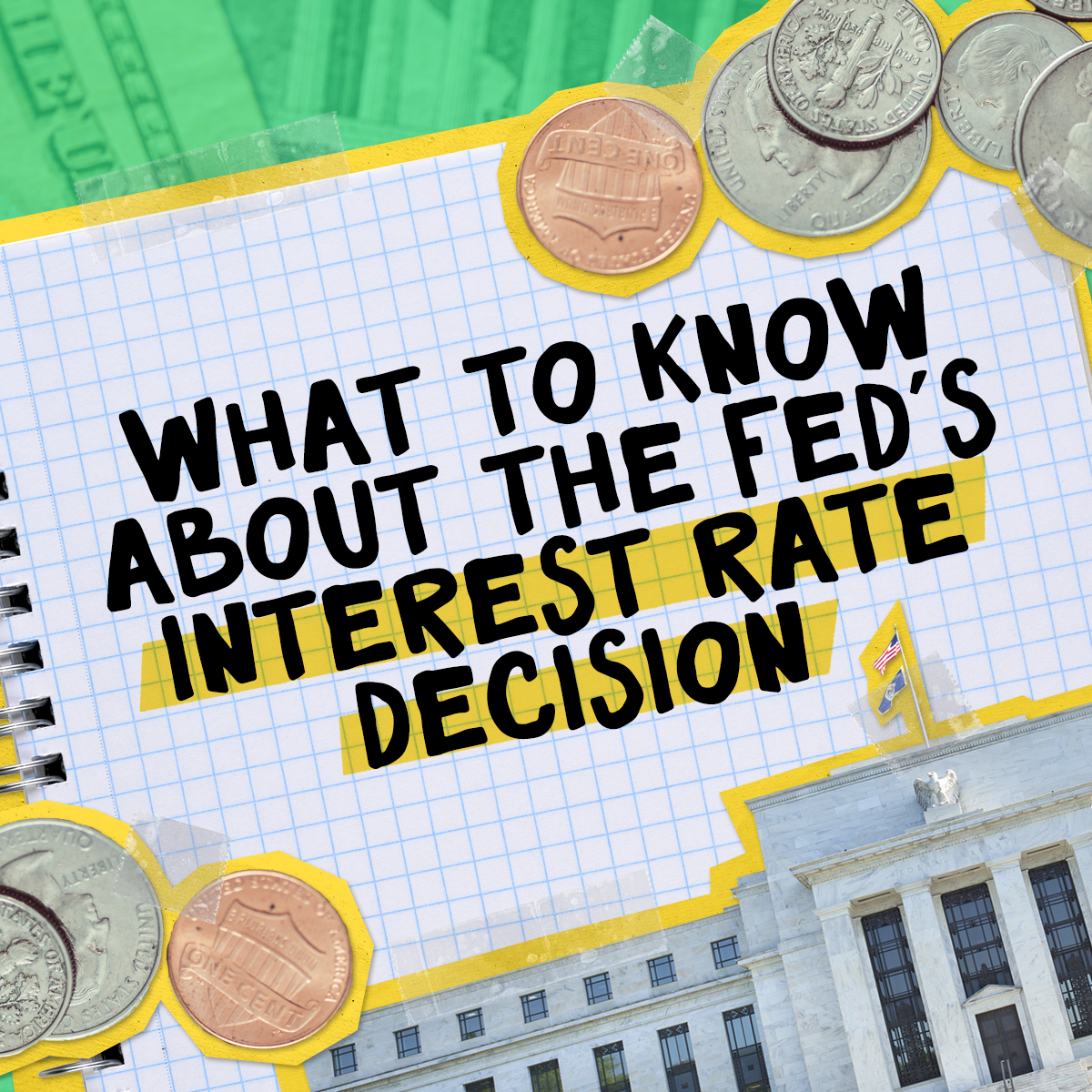
However, the Federal Reserve, the central bank of the United States, heavily influences interest rates by setting a target range for the rates banks charge one another for overnight loans. Banks use these short-term loans to ensure they have enough money available to meet their daily obligations as deposits and withdrawals fluctuate. They repay them the following day. Any changes to the interest rates banks pay on these loans impact all other interest rates paid by consumers and the federal government.
The Federal Open Market Committee, or FOMC, comes together eight times a year to make major interest rate decisions. This group consists of 12 voting members, including seven members of the Fed’s Board of Governors and five regional Fed bank presidents.
Over the course of each meeting, the FOMC reviews data on inflation, employment, consumer spending, and economic growth. Members then vote on whether to raise, lower, or maintain the target range for the federal funds rate. This is the interest rate banks charge one another for overnight loans. The Fed uses several tools, including adjusting the interest it pays banks to hold money at the Fed, to help keep the federal funds rate within that range.
Consumers do not borrow at the federal funds rate, but changes in it influence other rates throughout the economy, including those for mortgages, auto loans, and savings accounts. In other words, banks determine the interest rates they charge or pay consumers based on what they themselves pay or receive for loans.
When inflation is too high, the Fed may raise its target rate to discourage borrowing and spending. When the economy is weak, it may lower the rate to encourage spending and investment. This can help grow the economy, create job opportunities, and increase employment.
What this means for you.
Higher interest rates can increase the cost of borrowing money for college, a home, a car, or other major expenses. Take a 30-year mortgage for a $500,000 loan. Increasing the interest rate on that mortgage by just one point would add hundreds of dollars to the monthly payment and thousands of dollars to the total cost.
Higher rates also make the national debt more expensive because the government also pays interest. As the government spends more on interest payments, less money is available for other priorities. Over time, that could create pressure to reduce spending, raise taxes, or borrow even more.
Interest rates may seem complicated, but their effects can quickly reach your wallet and the broader economy. To keep up with the latest policy developments and better understand what they mean for interest rates and the national debt, check out our newsletter.
.webp)