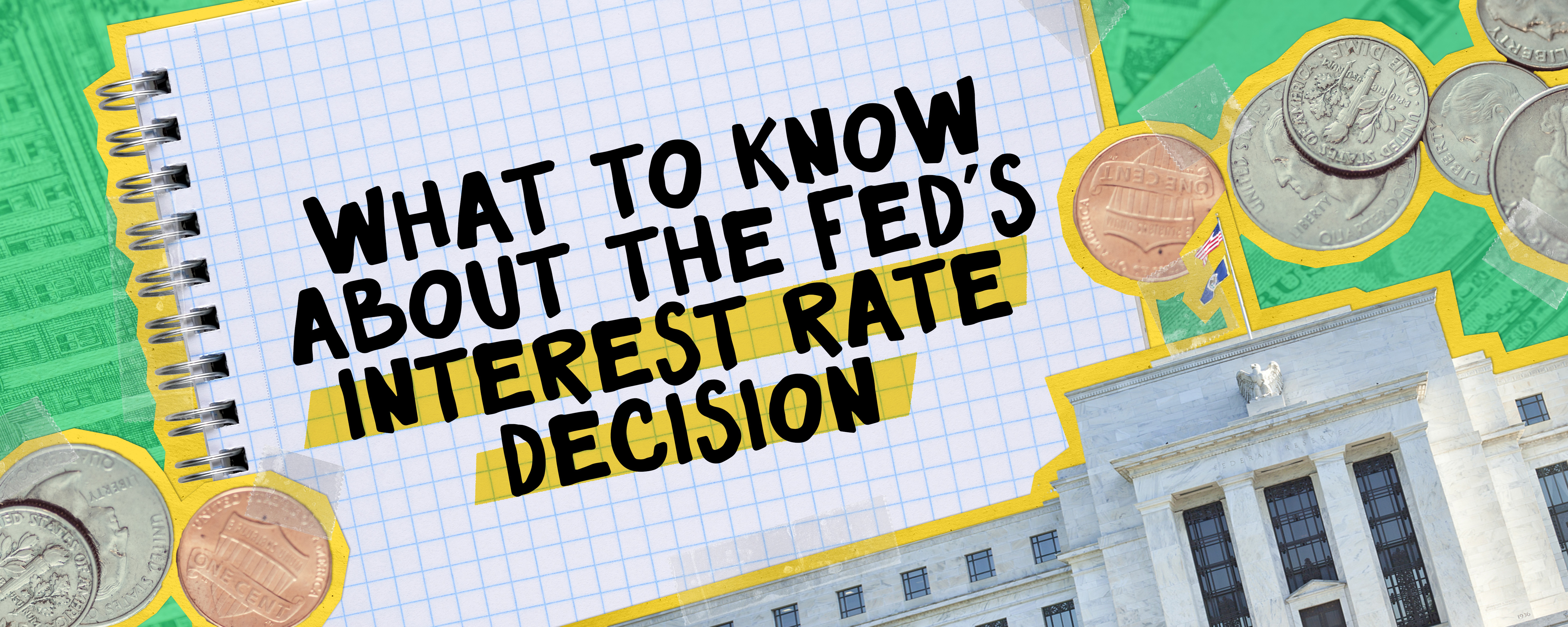
The Federal Reserve decided to raise interest rates this week for the first time in three years. Read below to find out more about this interest rate decision, the reasoning behind it, and its implications for you and the economy.
If you’re not quite sure how interest rates work or what they are, that’s okay! You can read more about what they are and the Fed’s role in setting them in our short explainer before diving into this article.
What did the Fed decide?
After its September meeting, the Fed’s interest rate-setting committee — the FOMC — voted to raise its target range for the federal funds rate by 25 basis points, from 3.50-3.75 percent to 3.75-4.00 percent.
We know that is a lot of jargon, so let’s unpack it.
The federal funds rate is essentially the interest rate that banks pay to borrow from or lend to other banks. The banks borrow from one another to allow for flexibility as deposits and withdrawals fluctuate. These aren’t the rates consumers or the federal government pay to borrow money, but they have a direct influence on those rates.
So, by raising the federal funds rate, the Fed aims to increase interest rates across the broader economy. That means this decision just made it more expensive for the public and the government to borrow.
Why did the Fed raise interest rates?
You may be wondering why the Fed would want to raise interest rates if that increases borrowing costs. Well, interest rates are one of the tools that the Fed uses to steer the broader economy, especially when it comes to inflation.
The Fed’s goal has long been to keep inflation around two percent — a sweet spot between modest price increases and steady economic growth. Zero percent inflation would be good for the prices that consumers pay, but bad for business revenues and expansion, so it is not the ultimate goal. On the other hand, high inflation is good for business revenues, but bad for consumer prices. Inflation has remained steadily above this two percent target since 2021.
Inflation started to trend downward from its post-COVID peak last year, but has spiked more recently primarily due to rising energy prices caused by the military conflict in the Middle East.
By raising interest rates, the Fed hopes to discourage borrowing and investment, slowing the economy and pushing inflation down toward that two percent target. New Fed Chair Kevin Warsh has made clear that, under his leadership, the Fed’s primary goal is to stabilize prices.
What this means for you and me.
Higher interest rates could help ease inflation and slow down rising costs across the economy. This means that the prices of things you buy, like groceries, may not rise as quickly.
Unfortunately, there are also downsides to increasing the federal funds rate. As we mentioned previously, this rate influences the cost of borrowing across the economy. For consumers, this means paying higher interest on things like credit cards, mortgages, auto loans, and student loans.
Interest rates also influence how much the federal government pays to borrow. Remember, the government has to borrow from the public to finance the over $40 trillion national debt. When interest rates rise, the government must pay more to attract lenders, making the national debt more expensive. The government already pays over $1 trillion in interest payments each year, impacting its ability to invest in the programs and priorities you care about.
For more updates on interest rates and the latest financial news, follow us on social media, sign up for our newsletter, and continue following along with our explainers at freefacts.org/resources.
.webp)