What It Means for You
In the last section, we discussed the large-scale implications of America’s unsustainable national debt and the crisis that could occur if we don’t do anything about it.
Day to day, it won’t take a crisis for you to feel the impacts. Here’s a rundown of how it will affect nearly every aspect of your life.
IMPACT #1
Lower incomes
A rising national debt stifles economic growth, which harms your potential income over your lifetime. Here’s how that could happen.
Incomes are tied to economic growth, which is dependent on investment. That investment comes from individuals, corporations, banks, and other entities, including the government — the very same entities that participate in the bond market.
To sustain a growing national debt, the government would need to borrow more. In this case, the government isn't borrowing to make investments of its own, it's borrowing to cover interest payments and the growing cost of entitlement programs. So the more bonds it issues, the more money it diverts from investment in economic growth.
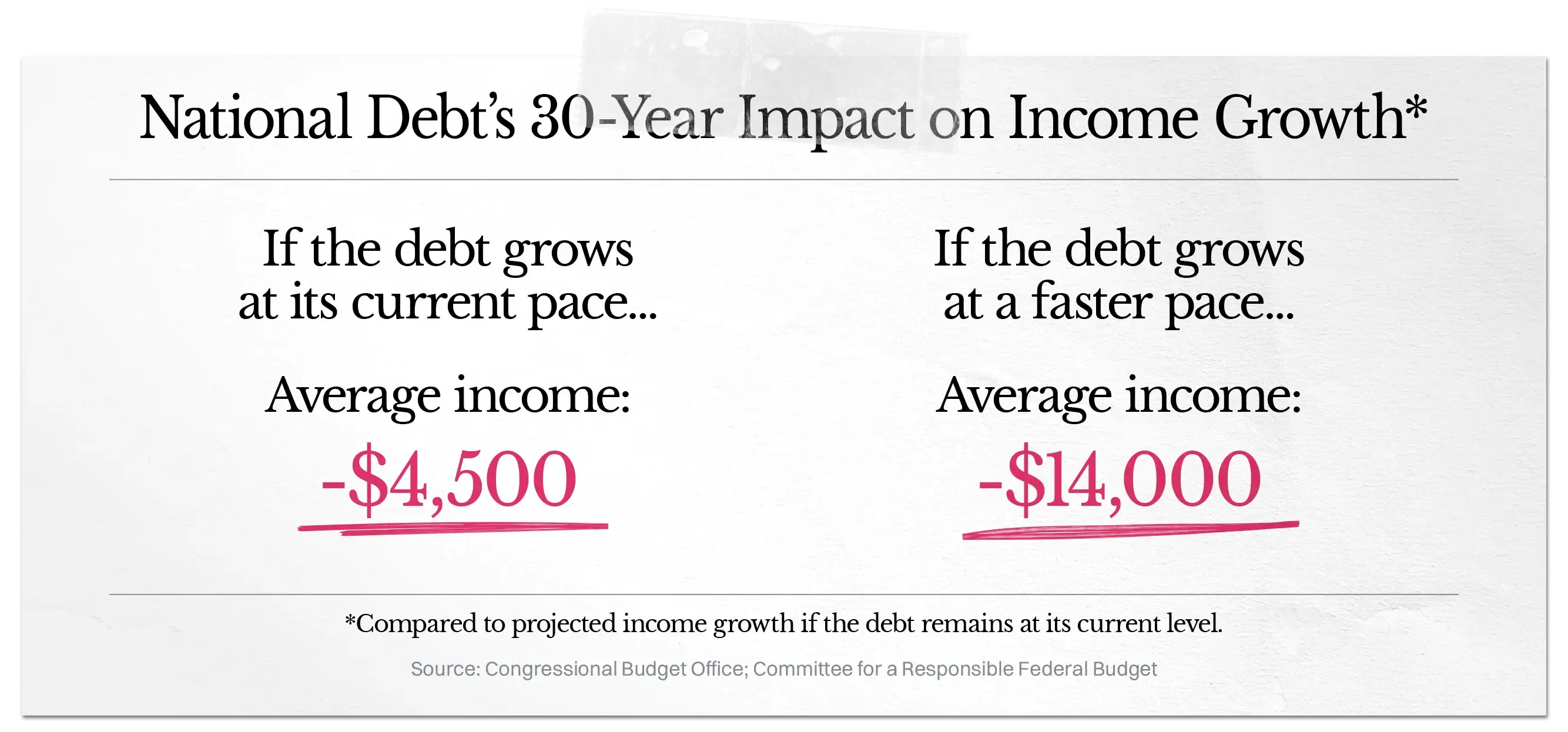
Because incomes are tied to economic growth, the potential for income growth slows as well. The current debt trajectory is projected to cause per-person income to grow by 10 percent less over the next 30 years. If the debt grows faster, that number could grow to 30 percent.
IMPACT #2
More expensive loans
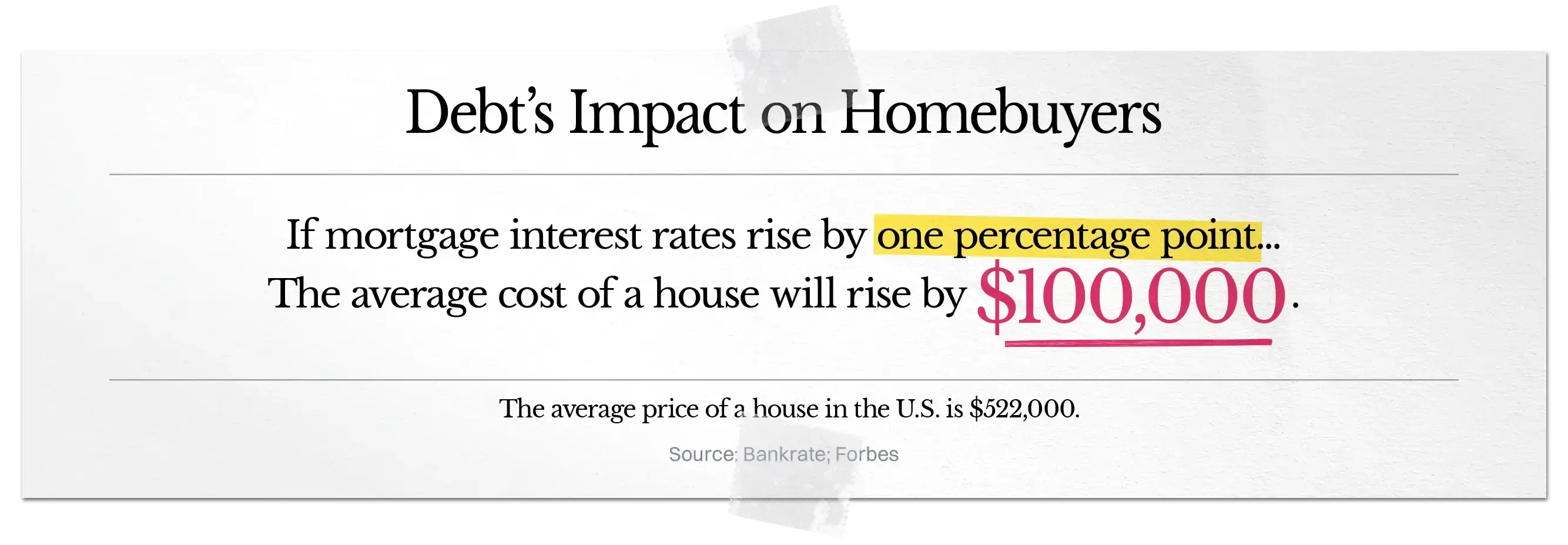
Got any big purchases coming up, like a home or a car? Need to pay for college? For most people, these purchases require loans, and the national debt will make them much more expensive.
Here’s how that happens:
- Interest rates on Treasury bonds often act as benchmarks for interest rates on other loans.
- As the government borrows more money, the interest rates on those bonds increase.
- That means as the government borrows more money, interest rates on consumer loans across the economy will grow.
On our current debt trajectory, those big purchases will cost you a lot more.
IMPACT #3
Higher prices
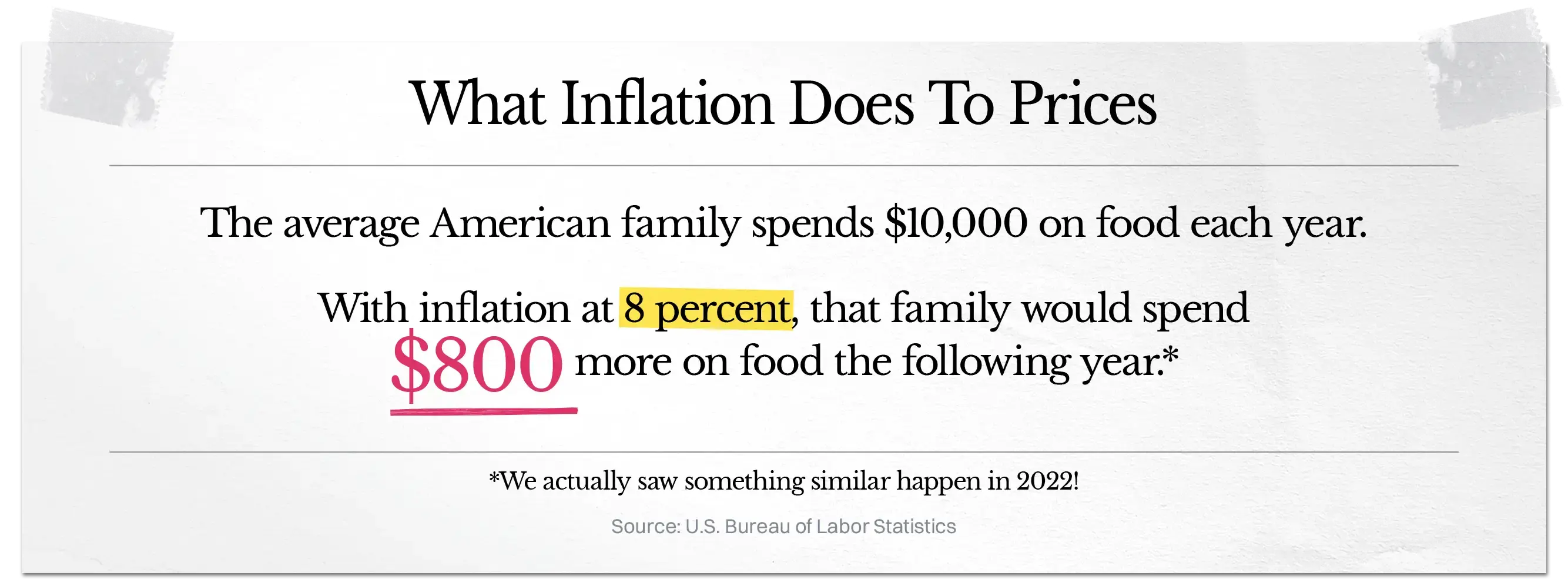
A growing national debt can also increase inflation, or the rise in prices of everyday items over time. Economists debate the extent to which a growing national debt directly leads to inflation, but here’s how that could happen.
- Overstimulating the economy: Deficit spending can boost the economy in times of crisis by providing consumers and businesses with more money to purchase goods and services (think back to the COVID-19 stimulus checks). But if it’s not used carefully, deficit spending can also overstimulate an economy, and the increased demand can cause prices to rise — a.k.a. inflation.
- Debt monetization: To accommodate more borrowing, the government could buy up its own bonds, which it has done before. In this scenario, the Federal Reserve (the U.S. central bank) essentially prints money to buy those bonds. With more money circulating in the economy, prices rise — a.k.a. inflation.
There are other schools of thought, too. But regardless of the specific dynamic at play, as the government borrows more money, inflationary pressures on everyday items will tend to grow.
IMPACT #4
A federal government that does less with more
This is all going to be taking place as you pay taxes to fund a government that will have to spend more and more of that on the national debt. You might care about climate change, criminal justice reform, education, or any number of policy issues. Remember, funding for those priorities is found within the federal budget.
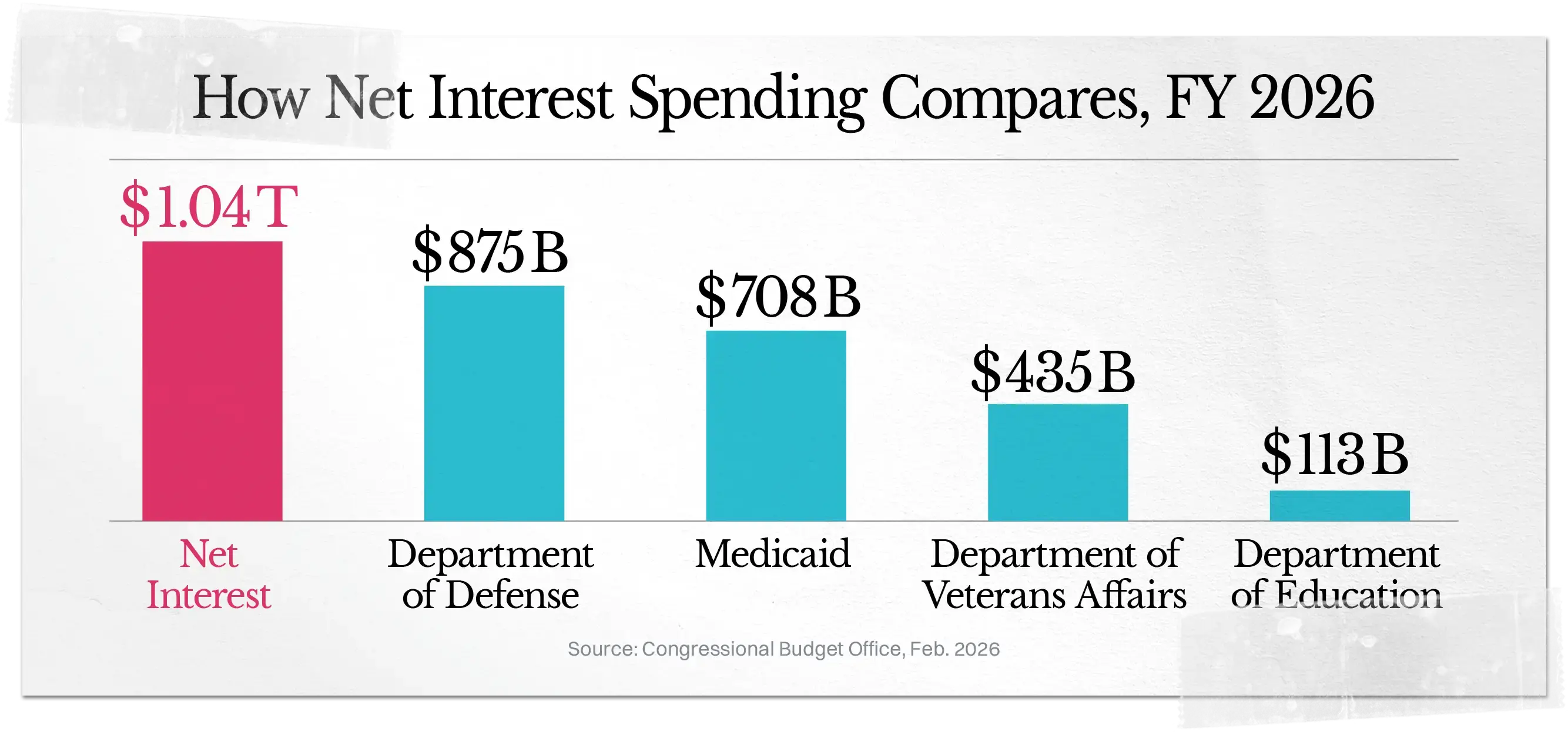
As the government continues borrowing more money, its net interest payments will also grow. In fact, more money already goes toward net interest than every government program except Social Security and Medicare. If this trend continues, the portion of the budget for other programs and priorities you care about will keep shrinking.