The news that the national debt reached $40 trillion this month left many Americans with more questions than answers.
What is this number? How does it work? Do we have to pay it off? There’s a lot to think about with America’s debt — especially when it impacts job creation, everyday costs, and loans for important purchases like college tuition, cars, and homes.
The most important thing you need to know is that it’s more than just a number. For young Americans in particular, it’s the future they're going to inherit, and at Free the Facts™, we believe that everyone deserves answers. No partisan spin, no sugar-coating — just the facts about an urgent challenge that will shape America and impact our shared future.
So, we asked you: what do you want to know about the national debt?
Keep reading for our policy experts’ answers to your questions.
Q: How does the national debt impact my daily life?
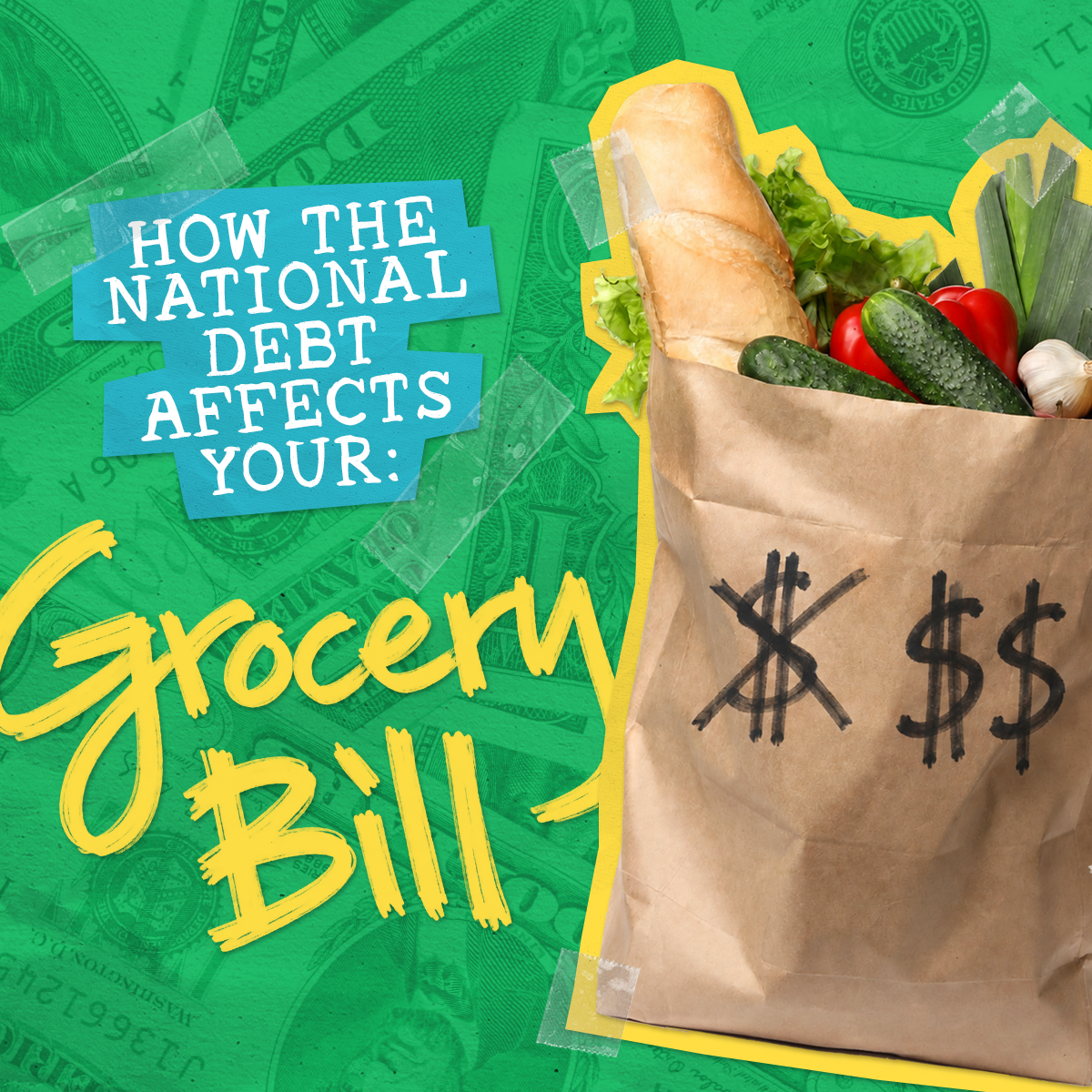
A: The national debt affects everything from your paycheck to the prices you pay. As the debt grows, it slows economic growth, reduces wages, and limits job opportunities. The debt also increases the cost of groceries, energy, and other everyday essentials. At the same time, it is pushing up interest rates, making it more expensive to borrow for college, a car, or a home.
Q: Will our national debt ever be paid off?
A: Probably not, but that’s not necessarily a problem. Nearly every country carries some debt. If that wasn’t an option, it would be difficult to respond to emergencies and invest in national priorities. The real concern is how quickly the national debt is growing. As a percentage of the economy, it is projected to grow indefinitely into the future, and that path is not sustainable. We need to focus on bringing down this growth rate, and yes, it is possible. You can read more about the options on the table here.
Q: What does the national debt mean for Social Security?
A: Social Security is projected to go insolvent in 2032 if Congress doesn’t act, triggering an across-the-board benefit cut of 22%. The national debt, meanwhile, increases everyday expenses, putting more pressure on retirement savings. As a result, retirees would feel the impact of Social Security benefit cuts even more.
The national debt also limits the government's options for avoiding benefit cuts. Without changes to payroll tax revenue or benefits, the only option for addressing Social Security’s insolvency is to borrow money to fill the gap, essentially bailing out the program. The higher the national debt, the harder and more expensive it will be for the government to do that.
Q: Who do we owe this money to?
A: Most of the national debt is owed to the public. This includes individuals like you as well as banks, businesses, pension funds, and other foreign governments and investors. The rest is intragovernmental debt — money the Treasury owes to other federal agencies and programs. In short, the government owes money to a mix of American investors, foreign entities, and itself.
Q: Can we address the national debt by only raising taxes or only cutting spending?
A: Remember, the national debt grows whenever the government spends more than the revenue it brings in. Theoretically, we could address the growing debt through spending cuts or tax increases alone. However, relying solely on either approach would require steep tax increases or significant cuts to federal programs. Realistically, stabilizing the debt will likely require a combination of both.
Q: Why can’t we just print more money to pay off the national debt?
A: We could, but it would likely come at a great personal cost. Printing more money would put more currency into circulation without increasing the actual supply of goods and services. When more dollars compete for the same amount of goods, prices can rise dramatically.
Q: Can’t we just stop making the interest payments on the debt?
A: The U.S government has long been considered a reliable borrower that makes debt interest payments on time. If the government skipped those payments, it would default on its debt, which would be cataclysmic. In the short term, it would cause a global economic recession. In the long term, investors might refuse to lend to the government or demand much higher interest rates, making borrowing more expensive for everyone.
Q: What can I do to address the national debt?
A: The national debt will be the defining issue of the next generation, and we all have the power to make a difference. Here are some places to get started:
- Read up on the national debt with Free the Facts’ national debt primer.
- Learn the skills you need to become a changemaker in Washington with Answer the Call’s™ Ambassador Program.
- Subscribe to Free the Facts’ bi-weekly policy newsletter, TL/DR D.C., to get the latest updates from Washington.
.webp)