It’s October, which means one acronym is making its annual appearance in the news: COLA. In this case, it’s the COLA for Social Security.
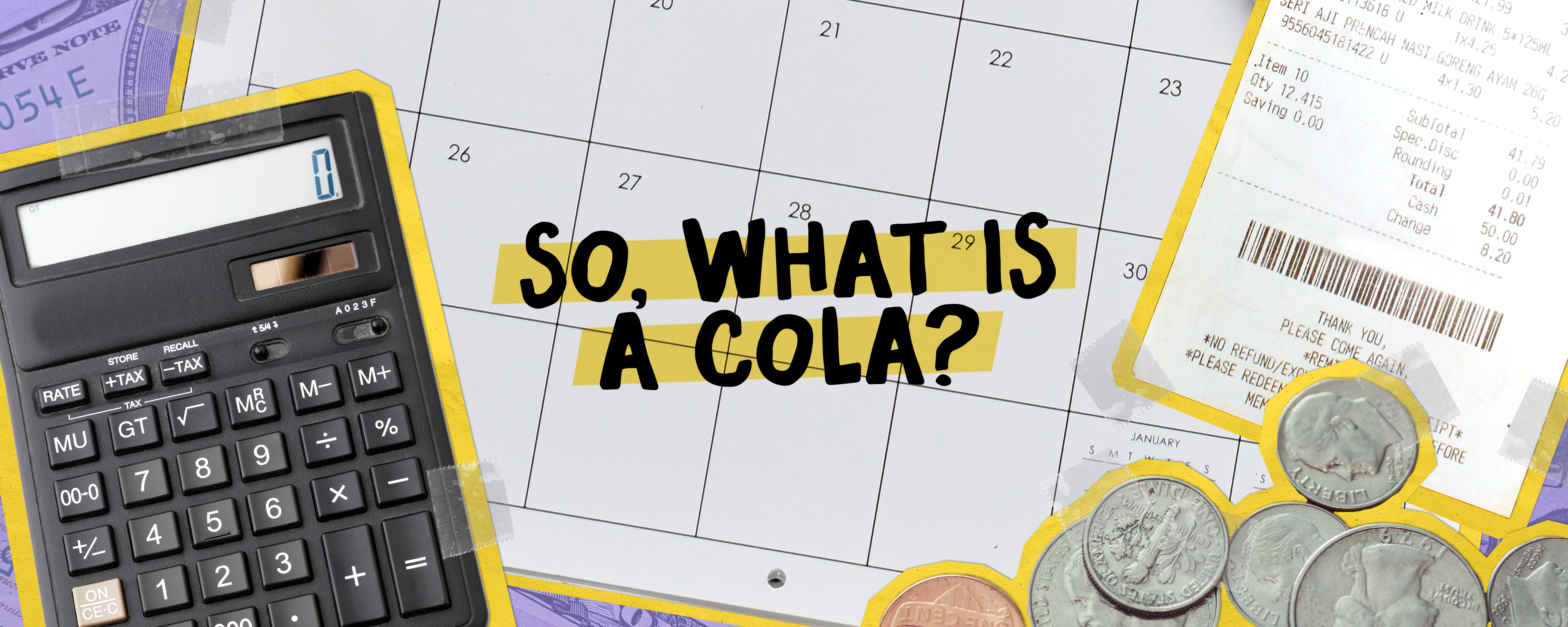
If you’re wondering what a COLA is — and no, we’re not talking about soda — you’re in the right place. COLA stands for cost-of-living adjustment, and they are used by both the private sector and the government. In the private sector, COLAs are generally annual increases in compensation, and for government programs, they are adjustments to the benefits they provide.
The Social Security COLA plays an important role in determining how much beneficiaries receive each year.
But where does the adjustment come from? Why does the government make it every year? And how does it affect Social Security benefits and the program’s long-term finances?
Keep reading for everything you need to know about these adjustments, from how they’re calculated to what they mean for millions of Americans who rely on Social Security.
What is the COLA?
For someone receiving the same government benefits year after year, inflation can gradually make it harder to cover everyday expenses. That’s where the COLA comes in. These adjustments happen annually and increase benefit payments to help offset rising prices across the economy.
The federal government uses COLAs across many government programs, but the most notable one is Social Security, since 75 million retirees, survivors, and people with disabilities rely on it.
Early in the program’s history, Social Security benefit increases occurred sporadically, with each requiring separate legislation from Congress rather than receiving an automatic annual adjustment. Congress established automatic annual cost-of-living adjustments in 1972, and the first took effect in 1975.
How is the COLA calculated?
Not all government programs use the same metric to measure inflation. The most commonly used and widely cited measure of inflation is the Consumer Price Index for All Urban Consumers (CPI-U), showing shifts in prices paid by the vast majority of the U.S. population (around 90%). It is used to adjust federal income tax brackets, standard deductions, and various other economic thresholds.
Social Security is relatively unique in that the COLA is currently based on the Consumer Price Index for Urban Wage Earners and Clerical Workers, or CPI-W, which reflects price changes for a much smaller part of the U.S. population (around 30%). Published by the Bureau of Labor Statistics (BLS), it tracks average price changes for expenses such as food, housing, and transportation.
The BLS performs a complex calculation that combines these changes into a single metric that averages these price increases or decreases. That metric helps everyone understand how much more or less expensive things are compared to the previous month or year.
The Social Security Administration compares the average for July, August, and September with the same period in the last year a COLA took effect, usually the previous year. The percentage increase determines the adjustment. For example, a 2.8% increase in CPI-W would result in a 2.8% adjustment to benefits. If there is no increase, benefits stay the same.
How does the COLA affect Social Security?
Over time, COLAs help prevent inflation from steadily eroding the value of benefits. Let’s take a look at the case of Ida May Fuller, the first person to receive monthly Social Security benefits. Her first check in January 1940 was for $22.54. If Social Security payments had never been adjusted, the original benefit would barely cover a takeout order today. Keeping benefits in line with rising prices is especially important for people who rely on Social Security to cover most of their everyday expenses.
However, higher monthly payments also mean higher program spending. Social Security is funded primarily through payroll taxes paid by workers and their employers. The program faces a growing gap between projected revenue, or the money the program takes in every year, and benefit costs. As the population ages, fewer workers support each beneficiary, putting pressure on the program’s ability to cover its costs.
What this means for you.
A COLA increase means a larger Social Security check, helping retirees keep up with rising prices. But a larger adjustment also means that the prices of key expenses have gone up. That extra money may help cover more expensive groceries and housing, but it won’t necessarily allow you to buy more.
Those larger checks also increase Social Security’s costs. Remember how we mentioned that other federal programs use other measures of inflation to calculate COLAs? Well, one option for reducing the program’s funding gap is to transition to a different metric that tends to reflect lower price increases, thereby producing smaller annual benefit adjustments. That would slow spending growth, but your benefits would also grow more slowly, leaving you with less money over time than under the current formula.
If Congress does not address the program’s funding shortfall, Social Security will no longer have enough money to pay full scheduled benefits as soon as 2032, resulting in 22% across-the-board benefit cuts for millions of Americans who rely on those payments.
To learn more about the program, the challenges facing it, and potential solutions, head to our Social Security primer.
.webp)